
01IoT Software Development
Custom Software Development for IoT in New York
Custom software development for IoT connects device data with decisions your team needs to make. We help New York businesses plan monitoring dashboards, alerts and operational integrations around actual hardware and connectivity conditions. Discovery establishes protocols, data ownership and failure handling before development begins.
02Custom IoT Software Development Services We Build
Custom IoT Software Development Services We Build
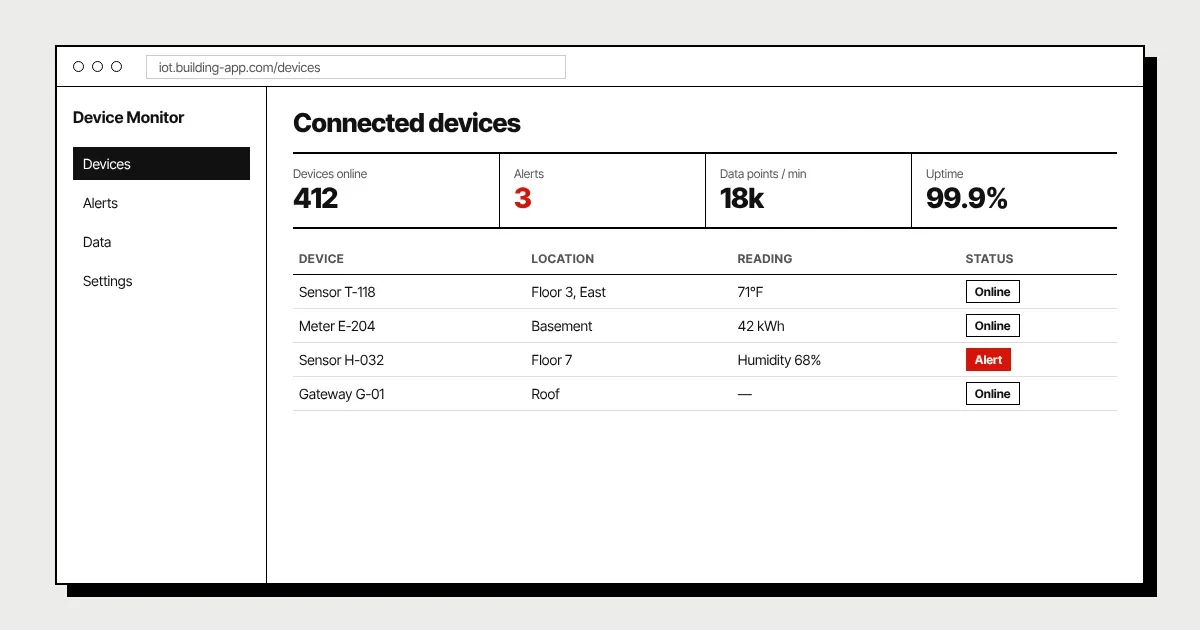
A connected device is useful when its data supports an operational response. Agree who needs the information, how current it must be and what happens when a reading is missing or implausible. A dashboard should distinguish the last known state from evidence that a device is working now.
- 01DashboardsShow relevant readings, trends and device status with timestamps and units. Define which comparisons or thresholds staff need rather than displaying every available metric. Permissions should reflect the buildings, assets or locations each user manages.
- 02Device managementMaintain a useful inventory of devices, identifiers and configuration where supported. Record connectivity and lifecycle state so operators know whether an asset is active, offline or retired. Remote control and update capabilities depend on the hardware and must be explicitly assessed.
- 03AlertsDefine actionable thresholds, recipients and escalation rather than treating every unusual reading as an emergency. Consider delay, repeated events and noisy sensors so people do not receive an unmanageable stream of messages. Track acknowledgement where the operational process requires it.
- 04Data pipelinesIngest readings with validated identifiers, timestamps and units, then store the detail needed for the task. Buffering, duplicate detection and late-arriving data affect the meaning of a trend. Retention and aggregation decisions should be made before uncontrolled data growth becomes an operating cost.
03Use Cases in New York
Use Cases in New York
The examples below describe possible software needs, not completed client projects or promised outcomes. The right design depends on available devices and how the business uses their readings. Monitoring can support an operational process without replacing professional inspection or judgment.
- 01Smart buildings and energy trackingEnergy and equipment data can support visibility into usage and unusual behavior across a building portfolio. NYC Local Law 97 sets emissions requirements for covered buildings, subject to applicability and exceptions; tracking software does not itself certify compliance or replace required reporting and professional review. Confirm the building's obligations with qualified advisers. This is general information, not legal advice.
- 02Fleet telematicsConnect supported location or vehicle events to dispatch and asset workflows. Define expected update frequency, gaps in coverage and the permissions for viewing location data. A last received position must not be presented as proof of a vehicle's current location during an outage.
- 03Facility monitoringTemperature, occupancy or equipment status can help staff identify conditions that need attention. Plan calibration, maintenance and what constitutes an actionable alert. Software interpretation is only as dependable as the source readings and the response process around them.
04Custom Software Development for Internet of Things: Connecting Devices
Custom Software Development for Internet of Things: Connecting Devices
Custom software development for Internet of Things needs a clear boundary between hardware, networking and applications. Inventory the device models, supported protocols and vendor access before deciding how data will move. An undocumented sensor or a locked-down platform may require vendor cooperation rather than a simple software connection.
MQTT can support message-based device communication when the hardware and network support it. APIs may expose information through an existing vendor platform, while gateways can bridge local devices and cloud services. Choose the route based on connectivity, security, response needs and who will maintain the components.
Define delivery assumptions explicitly: identifiers, message frequency, payload size and what happens when a connection drops. Devices or gateways may need to buffer and resend readings, while the application must handle duplicates and out-of-order events. Test those conditions before calling the pipeline ready for an operational rollout.
05Security for Connected Devices
Security for Connected Devices
Start with device identity and the lifecycle of its credentials. Where supported, use individual authentication rather than one shared secret for an entire fleet, and define how access is revoked. Device capability can constrain the approach, so assess the actual models instead of promising uniform controls for every sensor.
Use encrypted communication where supported, limit network exposure and separate device ingestion from administrative access. Validate incoming data as untrusted and protect any command path with explicit authorization. A reading should not be allowed to trigger an unrestricted business action simply because it came from a registered device.
Plan software and firmware update responsibilities with the hardware vendor or operator. Physical access, abandoned devices and unsupported firmware are operational risks beyond the dashboard. Keep logging and monitoring useful while avoiding unnecessary personal or location data, and agree incident and retention policies before deployment.
06How We Build IoT Projects
How We Build IoT Projects
An IoT project needs a feasibility check with actual devices or representative vendor interfaces. Establish success criteria for freshness, reliability and operator response, then confirm that the proposed connection can meet them. The prototype should test interruptions and noisy data, not just a live chart in ideal conditions.
- 01Discover devices and workflowsReview hardware capabilities, protocol access, data rights and connectivity with the people responsible for the assets. Map the operational action each reading should support. Identify hardware procurement or vendor dependencies outside the software scope.
- 02Prototype ingestion and monitoringConnect representative devices or supported interfaces, then test realistic messages and network gaps. Validate timestamps, units and alert behavior with operators. Use the result to decide what is feasible before expanding the number of devices or locations.
- 03Build the production serviceImplement ingestion, storage, permissions and dashboards in two-week sprints with demos. Budget for message volume and retention as well as the initial application. Test retries and recovery so failures can be investigated without losing their operational context.
- 04Roll out and hand overRelease to an agreed group of assets or a location first, with clear checks and named support owners. Deliver the custom code, repositories and credentials to the business. Agree monitoring, updates and the process for onboarding or retiring devices after launch.
07FAQ
Frequently Asked Questions
This page covers software, not a promise of hardware design or manufacture. Discuss the devices you already have or intend to source so responsibilities for procurement, installation and firmware can be agreed. Software feasibility depends on documented protocols or vendor interfaces; any hardware work or third-party involvement needs explicit scope rather than being assumed included.
08Related
09Contact
Let's build your software in New York
Book a free 30-minute call. We'll review your idea and give you an honest plan and estimate.
+1 718-883-7253Service area: Brooklyn, Queens & Manhattan, NYC
Hours: Open 24/7