
01Logistics
Custom Logistics Software Development in New York
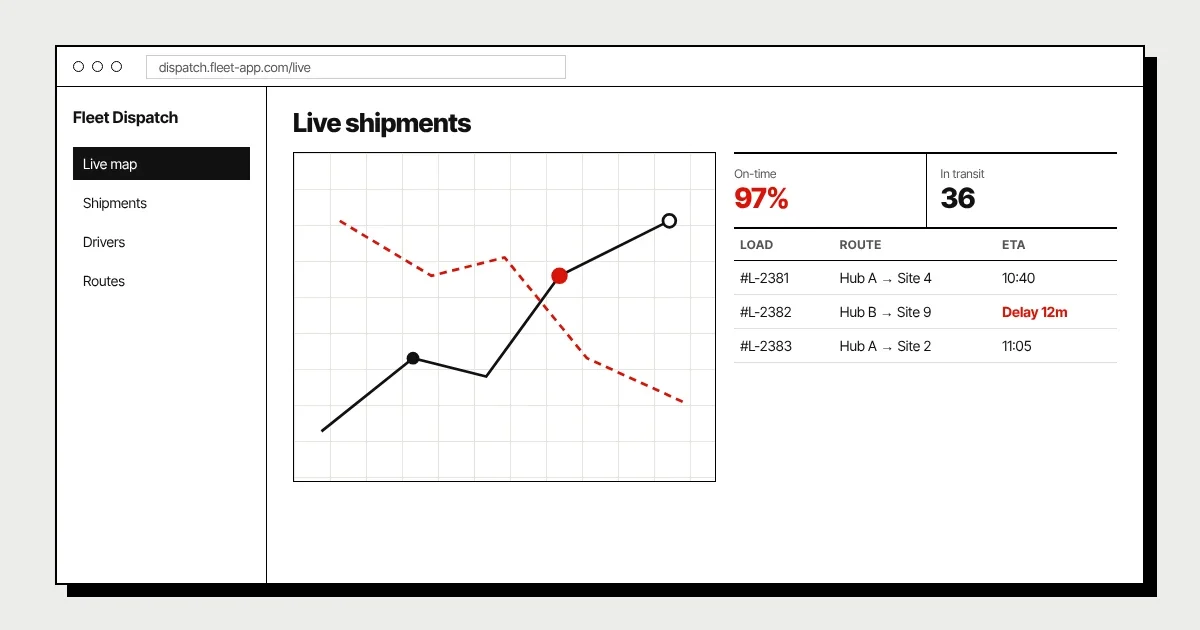
Custom logistics software development connects dispatch decisions with the vehicles, shipments and warehouse records behind them. SDO serves businesses in Brooklyn, Queens and Manhattan, planning operational software around real delivery constraints and supported provider data. We focus on reliable status, actionable exceptions and a practical source of truth rather than promising perfect visibility from an attractive map.
02Who This Is For
Who This Is For
Dispatch teams coordinating multiple vehicles need a different system from a warehouse tracking receipts or a business managing last-mile orders. Identify who creates work, who performs it and who answers customers when plans change. The first release should connect those responsibilities instead of offering isolated tools for each team.
Custom transportation software development can support an existing operational system through integrations rather than replace it entirely. Review the dispatch, carrier and accounting tools already in use and the records they control. Keep effective components when a focused connection resolves the main problem.
New York delivery planning needs practical context: dense borough streets, time windows and handoffs between port, warehouse and final destination. Define how operators override a plan and record why. Software should support accountable decisions, not assume routing alone can remove every operational constraint.
03Common Problems
Common Problems
Map one shipment through intake, assignment, loading, arrival and completion, then add the normal exceptions. Failed scans, partial loads and unavailable drivers are everyday events. A useful design reduces uncertainty about the next action rather than merely displaying more data.
- 01Status that is stale or contradictoryA location feed, driver update and warehouse scan may describe different stages of the same job. Show timestamps and source information so operators know what has actually been confirmed. The last received position cannot prove that a delivery is complete or that a vehicle remains at that location.
- 02Manual dispatch and repeated changesPhone calls and spreadsheets make exceptions hard to share across shifts. Record assignments, constraints and changes in one workflow with appropriate permissions. Preserve a clear operational history instead of silently replacing the plan every time a dispatcher intervenes.
- 03Unconnected inventory and billingOperational completion needs to reach the systems that manage stock, customer status and financial records. Agree identifiers and authoritative states before automating those updates. A missing proof of delivery or cancelled job should not become an unexplained accounting discrepancy.
04Custom Transportation Software Development: Solutions We Build
Custom Transportation Software Development: Solutions We Build
- 01Dispatch and route planningPresent jobs, constraints and supported route information together so dispatchers can assign work deliberately. Include delivery windows, vehicle needs and manual overrides in scope. Route suggestions should show assumptions and allow operators to handle a situation the planning data does not describe.
- 02Fleet and shipment trackingConnect supported telematics and carrier events to the relevant assets or shipments. Show data freshness, delays and unresolved exceptions with clear meanings. Customer-facing tracking should expose only the information appropriate to that customer rather than the entire operational map.
- 03Warehouse workflowsCoordinate receiving, allocation, picking and dispatch with agreed inventory records. Plan scans, adjustments and incomplete or duplicate events before implementing the ideal path. Staff need a safe way to resolve mismatches and understand why a quantity changed.
- 04Driver applicationsA mobile workflow can provide assigned jobs, status updates and scoped proof of delivery. Account for device use, permission boundaries and connectivity gaps on the road. Offline behavior requires explicit rules for storage, queued actions and conflicts when the device reconnects.
05New York Operating Context & Data Responsibilities
New York Operating Context & Data Responsibilities
Dense last-mile delivery involves more than distance: access, time windows and loading conditions can affect the plan. Warehouse and port handoffs around Brooklyn and Queens require clear status definitions and ownership of exceptions. Use the constraints your operation actually works with instead of inventing universal service times.
Manhattan congestion pricing can affect route and cost planning. MTA's Congestion Relief Zone includes local streets and avenues south of and including 60 Street, with specified exclusions; charges depend on vehicle, time and other applicable conditions. Link planning assumptions to current official information rather than hardcode an unverified toll for every trip.
Location, customer and driver information need appropriate access, retention and incident planning. Confirm applicable data and workforce policies with the business's advisers, and scope any regulated record requirements separately. Tracking software is not proof that all operational or legal duties have been met. This is general information, not legal advice.
06Custom Software Development for Logistics: Integrations
Custom Software Development for Logistics: Integrations
GPS and telematics providers differ in refresh frequency, event format and access permissions. Review the supported interfaces and plan how delayed or out-of-order data reaches the application. A near-real-time view depends on the upstream provider and network, not only the speed of the map screen.
Carrier APIs may expose labels, status or tracking events, while e-commerce platforms provide order and fulfillment information. Define the authoritative source for each field and how updates are matched to a job. Include cancellations, duplicate callbacks and failed synchronization in the scope.
Accounting connections should carry agreed operational events into approved financial workflows. Preserve identifiers and reconciliation status so staff can investigate a mismatch. Do not assume completing a dispatch screen authorizes unrestricted changes in accounting; review permissions and vendor capabilities before committing to an integration.
07How We Build Logistics Software
How We Build Logistics Software
Discovery follows the actual movement of work, data and exceptions across dispatch, drivers and warehouse staff. Identify the first release and the systems that must remain authoritative. We send a fixed quote within 48 hours of the free discovery call, with provider and operational dependencies stated clearly.
- 01Prototype the decisionsReview job assignment, tracking and exception handling using realistic scenarios. Agree what each status means and which actions different roles can take. A map should support the operator's decision rather than imply certainty the available data cannot provide.
- 02Build and test in sprintsTwo-week sprints with demos let operational owners check complete workflows as they develop. Test disconnected devices, repeated events and changed assignments. Confirm that stale data and unavailable integrations are visible, not silently treated as successful updates.
- 03Roll out and operateRelease to a defined workflow, asset group or team where a staged adoption is practical. Train users on exceptions and assign monitoring and support responsibilities. You own 100% of the custom code, repositories and credentials, with future features scoped from real operating feedback.
08Related services
Related Services
09FAQ
Frequently Asked Questions
We can assess the provider's supported API, permissions and available data before agreeing the scope. Refresh intervals, event formats and outages affect the result, so live-looking maps need timestamps and explicit freshness expectations. Provide vendor documentation and access arrangements during discovery; compatibility with every GPS product cannot be guaranteed in advance.
10Contact
Let's build your software in New York
Book a free 30-minute call. We'll review your idea and give you an honest plan and estimate.
+1 718-883-7253Service area: Brooklyn, Queens & Manhattan, NYC
Hours: Open 24/7