
01Insurance
Custom Insurance Software Development in New York
Custom insurance software development connects policy, claims and distribution workflows with clear permissions and traceable decisions. SDO serves New York agencies, MGAs and carriers in Brooklyn, Queens and Manhattan, starting with the process and data already in use. We plan portals, quoting and integrations around authorized business rules rather than promise that software alone establishes regulatory compliance.
02Who This Is For
Who This Is For
An agency coordinating enquiries and renewals has different needs from an MGA managing delegated workflows or a carrier operating a policy system. Identify the decisions your organization is authorized to make and the systems that hold the authoritative records. The release scope should fit those responsibilities instead of blending every role into one application.
Operations, underwriting, claims, distribution and IT stakeholders may all contribute requirements. Name the owners who approve rules, access and exceptions so engineers do not infer policy behavior from inconsistent documents. Customer-facing steps need a practical process behind them when information is incomplete or a request needs review.
Custom insurance software development services can improve a bounded workflow while retaining a useful legacy platform. A full replacement is not the default answer to a slow interface. Review integrations and operational risks before deciding which components should be extended or modernized.
03Common Problems
Common Problems
Walk through a submission, policy change or claim from start to completion and record normal exceptions. That reveals whether the bottleneck is data, integration or an approval process. A new dashboard cannot resolve a decision that nobody has authority to make.
- 01Repeated data entry and slow quotingInformation may move between emails, spreadsheets and carrier tools without stable identifiers. Map what can be reused and where values must be verified before a quote is produced. Faster entry is only useful when the result preserves the approved rating and review rules.
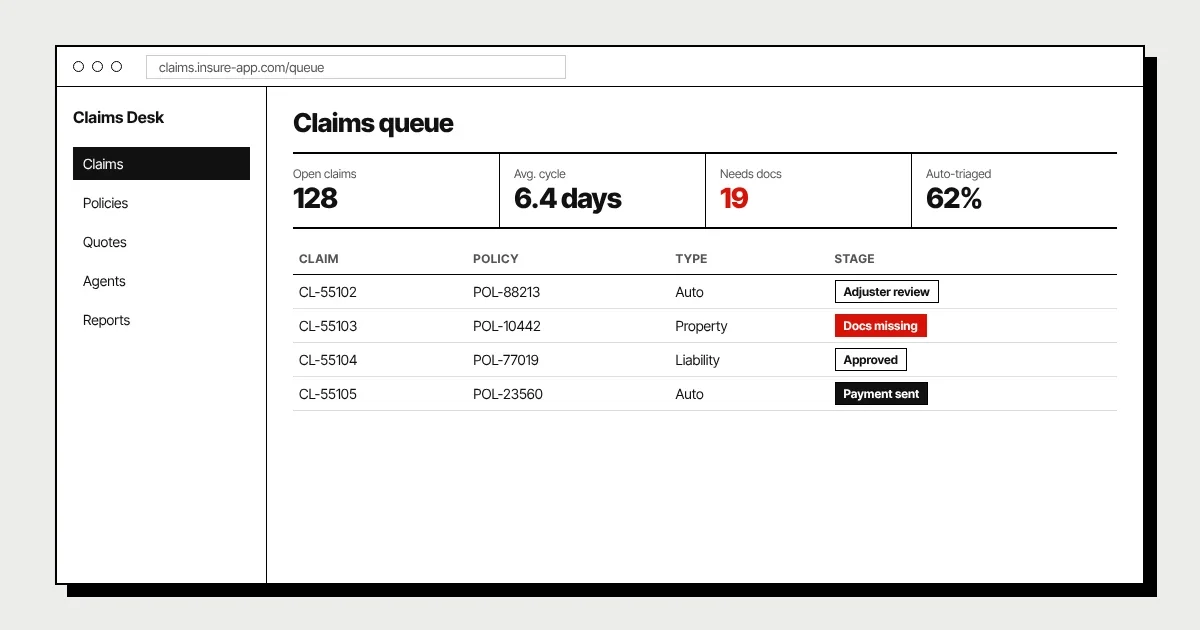
- 02Claims without a clear next actionA claim can wait for documents, review or a decision, and those states should be visible to authorized users. Assign responsibility and preserve the information supporting each action. A shared inbox is not a substitute for a controlled workflow when several people handle the same case.
- 03Legacy dependencies and access gapsOlder policy systems may contain important behavior that has never been documented. Review those rules before replacing screens or migrating data. Portal access and administrative permissions need boundaries so external users do not gain unrelated policyholder information.
04Custom Insurance Software Development Services: Solutions We Build
Custom Insurance Software Development Services: Solutions We Build
- 01Policy administration workflowsConnect approved submissions, endorsements or renewals with the system of record. Preserve effective dates and relevant history rather than overwriting prior values without context. The implementation follows business-approved rules; it should not invent contract interpretation or underwriting decisions.
- 02Claims and document workflowsOrganize intake, evidence requests, review and case status with accountable ownership. Limit access to the information relevant to each role and record meaningful changes. Document automation can assist the process while review and consequential decisions remain appropriately controlled.
- 03Quoting and rating connectionsIntegrate supported rating services and display outcomes with the assumptions and status users need. Plan failed requests, revisions and referral or review paths. A technically valid response must still be handled according to the organization's approved quote workflow.
- 04Agent and customer portalsGive agents or policyholders a controlled set of tasks and records, with identities and authorization planned first. Define what can be submitted, viewed or amended and who handles exceptions. Internal notes and unrelated cases must stay outside the external view.
05Compliance & Policyholder Data
Compliance & Policyholder Data
The organization and its advisers determine applicable obligations and approved workflows. Application controls can support that work but cannot replace governance, reporting or professional review. Establish those responsibilities during discovery so acceptance includes the controls required for the actual business.
- 01NYDFS 23 NYCRR Part 500Covered entities have cybersecurity requirements with applicability and exemptions depending on the organization. Role management, application security and evidence needs can shape development. Confirm relevant controls and operational responsibilities with your compliance team rather than label every insurance interface automatically compliant. This is general information, not legal advice.
- 02NY SHIELD ActPrivate information within the SHIELD Act's scope requires reasonable safeguards. Plan the information collected, access boundaries and incident procedures with the business's advisers. A hosted platform or an encrypted connection does not eliminate the organization's wider obligations. This is general information, not legal advice.
- 03Retention and audit historyRecordkeeping and retention requirements depend on the records, activities and rules involved. Have authorized owners define retention, deletion, holds and access, then implement those policies without inventing a universal period. Audit trails should capture meaningful actions without unnecessarily copying sensitive information. This is general information, not legal advice.
06Custom Software Development for Insurance Industry Integrations
Custom Software Development for Insurance Industry Integrations
Rating and carrier APIs differ in permissions, products and available operations. Confirm vendor approval and environment access before treating an integration as a committed feature. Map identifiers and decision states so submissions and responses can be reconciled when messages are repeated, incomplete or delayed.
Payments, CRM and e-signature tools can connect commercial and document workflows with the core policy process. Agree which system owns customer details, payment status and the final signed document. An e-signature event should not trigger an unrelated action without the approved checks and context.
Monitor failures and provide controlled operator tools for normal exceptions. Staff need to know which update failed and whether retrying could create a duplicate or inconsistent record. Support for vendor changes and credential lifecycle belongs in the operating plan after the first release.
07How We Build Insurance Software
How We Build Insurance Software
Discovery follows the actual policy or claims journey, including responsibilities, data history and external systems. Agree a complete first release with the people authorized to approve its rules. We send a fixed quote within 48 hours of a free discovery call, with integration and access assumptions in writing.
- 01Design and validationPrototype the tasks for internal users, agents or customers, including review and errors. Verify role boundaries and status meanings before implementation. The design should help operators explain the next action and supporting information without exposing unrelated records.
- 02Incremental development and testingDeliver in two-week sprints with demos of the connected workflow. Test permissions, repeated events, unavailable vendors and historical records rather than only a successful quote. Involve IT and operational owners so the new application fits existing governance and release requirements.
- 03Migration, release and supportRehearse the transfer of records and validate relationships, dates and meaningful totals before cutover. Plan training, monitoring and the response to failures. You own 100% of the custom code, repositories and credentials, with future improvements and support scoped to actual needs.
08Related services
Related Services
09FAQ
Frequently Asked Questions
Yes, after reviewing the current behavior, integrations and authorized access. A phased approach may retain useful components while improving specific workflows, with data ownership clear during transition. Migration and release planning must preserve important history and business rules; a legacy assessment comes before promising a complete replacement or a fixed recovery deadline.
10Contact
Let's build your software in New York
Book a free 30-minute call. We'll review your idea and give you an honest plan and estimate.
+1 718-883-7253Service area: Brooklyn, Queens & Manhattan, NYC
Hours: Open 24/7