
01Retail & E-commerce
Custom Retail Software Development in New York
Custom Retail Software Development begins with the people, records and decisions involved in your workflow. We help New York organizations plan a practical first release around existing systems, privacy needs and tested integrations. Discovery clarifies responsibilities and scope before development starts.
02Who This Is For
Who This Is For
A retailer selling through a store and website needs consistent records across channels. A brand launching a specialist online journey may need a different approach, while a multi-location business may prioritize stock and permissions. Define the first useful outcome before selecting a platform or assembling a broad feature list.
Include store staff, fulfillment, customer support and accounting in the requirements where their work is affected. An online order is not complete when checkout succeeds; someone must allocate stock, fulfill it and handle changes. The application should support that entire sequence without requiring staff to reconcile conflicting tools every day.
Custom ecommerce software development can extend Shopify or another useful platform through supported integrations. It does not have to replace checkout, administration and every existing service. Keep the components that work well and focus investment on the specialist workflow the business actually needs.
03Custom Ecommerce Software Development vs Shopify
Custom Ecommerce Software Development vs Shopify
Shopify may be a practical choice when its store, checkout and app ecosystem fit the business. Compare the required workflow with supported configuration before deciding to build. A commercial platform can reduce implementation responsibilities, but fees, application dependencies and customization limits still belong in the budget.
A custom store can support unusual product configuration, purchasing rules or connections that standard options cannot represent clearly. It also brings responsibility for maintenance, hosting and future changes. Assess the complete operating cost rather than assume owning the code eliminates recurring expenses.
Use realistic orders to compare approaches: a normal purchase, a cancellation, a return and a stock shortage. Identify which system controls product details, availability and financial status. A attractive storefront cannot compensate for an order process that the operation cannot fulfill reliably.
04Custom POS Software Development and Omnichannel Inventory
Custom POS Software Development and Omnichannel Inventory
- 01Point-of-sale workflowsCustom POS software development needs a clear view of the hardware, provider capabilities and store tasks. Assess supported terminals, receipts and payment interfaces before promising compatibility. Decide how staff handle returns, discounts and interrupted connections with approved business rules.
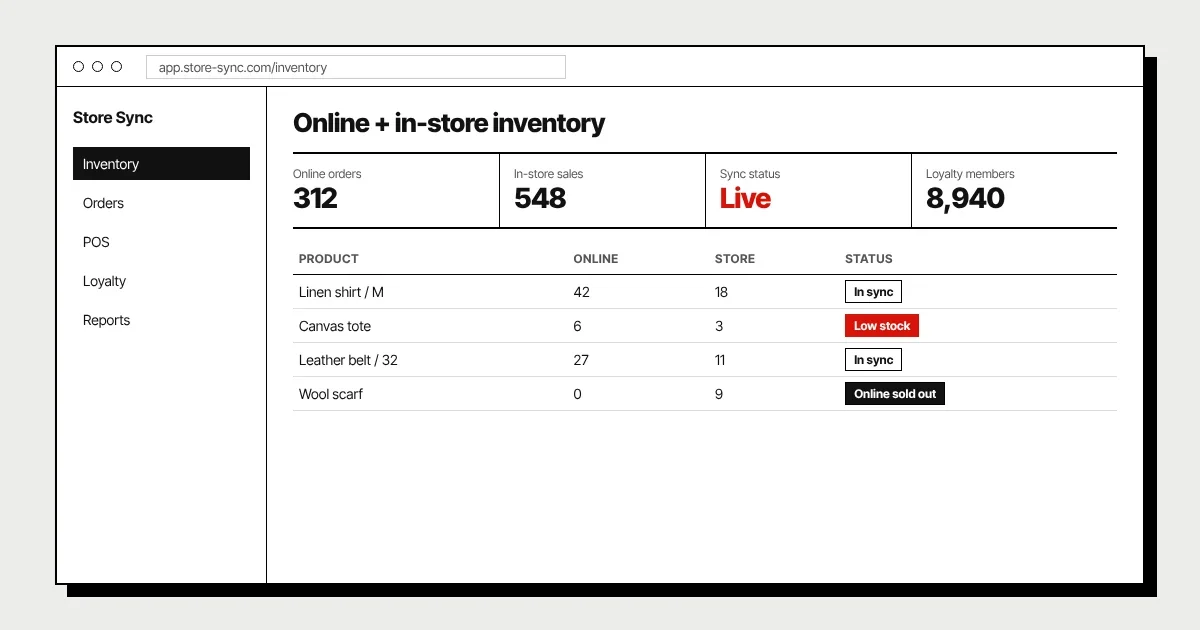
- 02Shared stockDefine locations, reservations and the events that change availability. An online cart, a paid order and a picked item may have different meanings for inventory. Synchronization should preserve those distinctions rather than copy a single stock number indiscriminately between channels.
- 03Orders and fulfillmentTrack orders through assignment, picking, dispatch and any cancellation or partial completion. Link each state to a named operational action. Store pickup and delivery should use clear rules so customer-facing confirmations do not promise stock or timing the system has not established.
- 04ReconciliationTemporary outages and repeated events can produce duplicate or conflicting records. Give authorized staff visibility into failed updates and a safe resolution process. Accounting and inventory need consistent identifiers so a successful sale can be traced without manual guesswork.
05Loyalty That Fits the Customer Journey
Loyalty That Fits the Customer Journey
A loyalty system should support a behavior the business values, not simply award points because a competitor does. Define eligible actions, balances and redemption rules with an accountable owner. Refunds, cancellations and expired benefits need explicit treatment alongside successful purchases.
Customers need to understand what they have earned and how it can be used. Staff need tools to investigate normal exceptions without unrestricted access to every account. Connect loyalty events to reliable order states rather than rewarding an action that may later fail or be reversed.
Measure the agreed outcome, such as repeat purchasing, without presenting enrollment totals as proof of value. Limit personal information to what the program needs and scope communication preferences. A program's commercial terms and promotional conditions must come from the business, not be invented as software defaults.
06Payments, Accessibility and Customer Data
Payments, Accessibility and Customer Data
- 01PCI DSSPayment account data handling can create PCI DSS responsibilities. Use an appropriate payment provider and avoid storing unnecessary card data, while confirming the merchant's remaining obligations. Hosted checkout is not an automatic exemption from every payment security requirement. This is general information, not legal advice.
- 02ADA and WCAGAccessibility planning should include keyboard use, readable labels, meaningful errors and the checkout journey. WCAG provides technical guidance, while applicable ADA and other legal responsibilities require review for the actual business. Automated checks alone cannot guarantee accessibility or legal compliance. This is general information, not legal advice.
- 03Customer informationApply permissions and careful logging to customer, order and loyalty records. Plan recovery, access reviews and update ownership before launch. Data protection must continue while promotions, integrations and product usage change, not stop when the store first opens.
07How We Build Retail Software
How We Build Retail Software
Discovery follows a purchase through customer, store and fulfillment tasks, then defines a first release with clear system ownership. Review platform and hardware access before agreeing scope. A fixed quote follows the free discovery call within 48 hours, with assumptions and exclusions visible.
Prototypes should cover checkout, administrative tasks and common exceptions. Development runs in two-week sprints with demos of complete workflows, including synchronization and permissions. Test realistic device use and failures rather than approve only attractive product pages.
Before release, rehearse any product or customer migration and confirm production accounts, training and support owners. You own 100% of the custom code, repositories and credentials. Hosting, third-party usage and maintenance remain planned operating responsibilities, with new features prioritized from actual customer and staff feedback.
08Related services
Related Services
09FAQ
Frequently Asked Questions
Compare the actual purchasing and operational workflows with Shopify's supported configuration and integrations. A custom store may fit specialist requirements, but it adds development and maintenance responsibilities. Review total cost, data ownership and fulfillment before deciding; a custom build is not automatically better than a commercial platform that already meets the important needs.
10Contact
Let's build your software in New York
Book a free 30-minute call. We'll review your idea and give you an honest plan and estimate.
+1 718-883-7253Service area: Brooklyn, Queens & Manhattan, NYC
Hours: Open 24/7