
01Fintech & Finance
Custom Fintech Software Development in New York
Custom Fintech Software Development begins with the people, records and decisions involved in your workflow. We help New York organizations plan a practical first release around existing systems, privacy needs and tested integrations. Discovery clarifies responsibilities and scope before development starts.
02Who This Is For
Who This Is For
A founder testing a payment workflow needs a different release plan from an established firm connecting internal financial systems. Decide what the product will actually do, which regulated or commercial parties provide the service and what the application is authorized to access. Those boundaries influence architecture more than the word fintech alone.
Operations, finance, product and security stakeholders should help define the requirements. A useful screen must correspond to a valid transaction and a process for resolving an exception. Name the people who can approve money-related rules rather than leaving engineers to infer them from existing spreadsheets.
Custom financial software development can support a focused portal or a broader operational platform. The scope should distinguish a customer interface from the systems and obligations behind it. We do not promise a banking license, regulatory approval or an investment outcome as part of software delivery.
03Common Problems
Common Problems
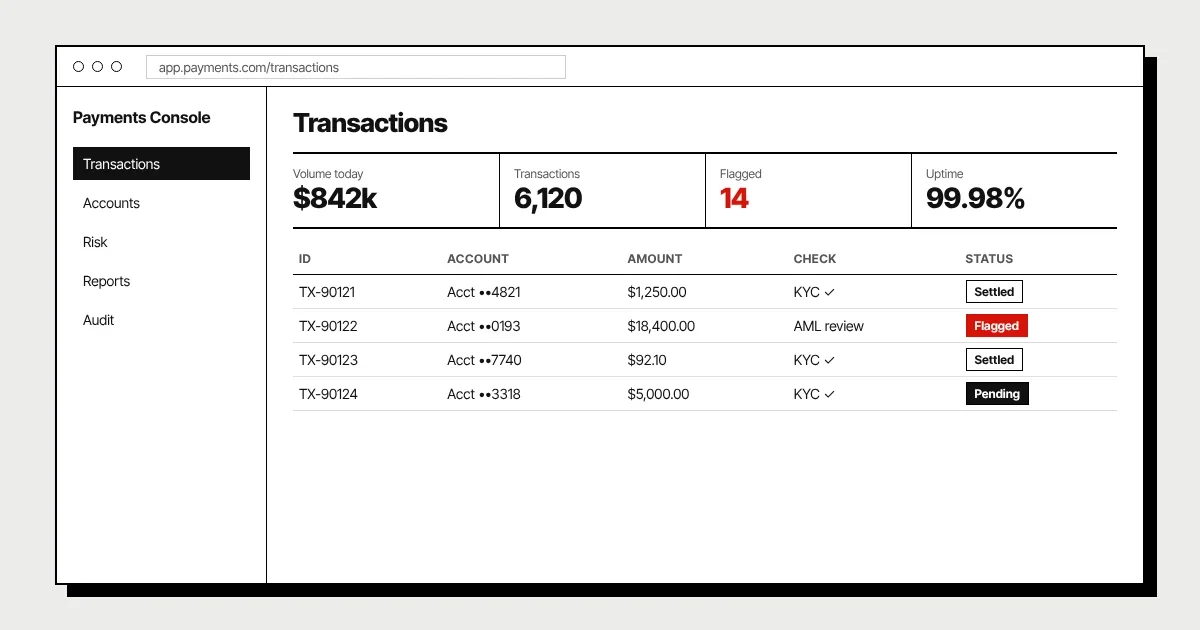
Walk through a transaction beyond its initial submission: provider callbacks, delays, duplicate messages and cancellation are normal operating conditions. The design needs a stable explanation of each state. Reliability is built into those rules, not added by placing a secure-looking badge on the interface.
- 01Inconsistent financial statesA payment can be initiated, pending, failed or reversed, and those states must not be collapsed into one success label. Identify the authoritative source and the events that change status. Staff need to understand discrepancies instead of manually editing balances to make the screens agree.
- 02Manual reconciliationRecords from providers, internal systems and accounting may arrive at different times. Define identifiers and matching rules, then route unresolved cases to the appropriate operator. Automating reconciliation without a controlled exception process can hide errors rather than remove work.
- 03Access and audit gapsUsers handling customer information or financial actions require clear permissions and accountability. Shared administrative access and untraceable changes undermine the reliability of a platform. Agree which actions need additional review and what evidence is retained when decisions are made.
04Custom Financial Software Development: Solutions We Build
Custom Financial Software Development: Solutions We Build
- 01Payment and lending workflowsCustom payments software development can connect approved providers with onboarding, status and operator review. Lending workflows may organize applications and supporting information around decisions owned by the business. Validate permitted actions and record their outcomes without presenting automation as a substitute for required oversight.
- 02Banking and wealth portalsCustom banking software development can present agreed records and actions through supported provider interfaces. Define permissions, data freshness and reconciliation before treating a displayed figure as final. Wealth interfaces should distinguish information and service workflows from advice the software is not authorized to provide.
- 03Trading tools and market dashboardsCustom trading software development may support analysis, monitoring or authorized order workflows with explicit scope. Market data licensing, freshness and execution dependencies influence the product. Risk controls and permissions need review before any action can affect an actual account.
- 04Operations and administrationProvide controlled ways to investigate failed events, reconcile records and manage normal exceptions. Audit history should explain who performed an action and its result. Administrative tools need the same attention to security and testing as the customer-facing experience.
05Compliance & Security Requirements
Compliance & Security Requirements
Applicable obligations depend on the entity, activities and information involved. Financial, legal and compliance owners must determine requirements and approve the business rules. We can implement scoped controls and evidence collection without claiming the product itself grants authorization to operate.
- 01NYDFS 23 NYCRR Part 500Covered entities face cybersecurity requirements, with applicability and exemptions varying by organization. Access management, application security and auditability can affect scope and acceptance testing. Review the relevant requirements with your compliance team rather than assume every fintech has identical duties. This is general information, not legal advice.
- 02PCI DSSPayment account data handling can create PCI DSS responsibilities. Supported hosted payment collection may reduce the information your application handles, but does not automatically remove every merchant obligation. Agree the payment design and validation needs with the provider and qualified advisers. This is general information, not legal advice.
- 03KYC and AML workflowsSoftware can organize identity checks, review queues and evidence according to approved policies. Legal and compliance owners determine required checks, escalation and decisions for the service. Do not assume a vendor integration alone makes a business compliant or that automated approval is suitable for every case. This is general information, not legal advice.
- 04SOC 2 readinessSOC 2 readiness concerns an organization's controls and evidence, not an application feature or a certification we claim to hold. Scope logging, access processes and operational documentation where relevant to the organization's objectives. An independent examination and ongoing control operation are separate from writing the software.
06Custom Payments Software Development & Provider Integrations
Custom Payments Software Development & Provider Integrations
Plaid and Stripe connections depend on the selected products, access permissions and provider terms. Define consent, account linking, events and recovery paths for the actual workflow. Sandbox success does not guarantee production approval or access to every capability offered by the vendor.
Core banking APIs introduce their own rules for authentication, identifiers, limits and availability. Map which records are authoritative and how changes are reconciled when messages arrive twice or late. The application should not infer a completed transaction from a network timeout or a partially processed request.
Market data feeds require attention to licensing, allowed distribution and refresh expectations. Show freshness and outages in the interface so users can interpret the information correctly. Monitoring, accounting connections and provider upgrades belong in the operating plan rather than being assumed permanent once the initial API call works.
07How We Build Fintech Software
How We Build Fintech Software
Discovery traces the transaction, customer data and operator decisions across all parties. Identify the first release, dependencies and risks before a fixed scope is agreed. A quote follows the free discovery call within 48 hours, with provider access and approval assumptions made explicit.
- 01Design the states and controlsPrototype the useful journeys and define transaction states before implementation. Review roles, approvals and error behavior with business and technical owners. Make pending or uncertain outcomes visible rather than designing only successful screens.
- 02Build and test incrementallyUse two-week sprints with demos of complete workflows and their exception paths. Test authorization, duplicate events and reconciliation against the agreed business rules. Confirm provider behavior in supported environments without assuming test data proves every production condition.
- 03Launch and operatePlan deployment, monitoring and the owners of financial exceptions. You own 100% of the custom code, repositories and credentials. Agree how provider changes, security updates and new features will be reviewed once real customers use the system.
08Related services
09FAQ
Frequently Asked Questions
We can discuss how relevant application controls and evidence needs affect scope, but your compliance team determines applicability, exemptions and obligations. Part 500 is an organizational cybersecurity requirement, not a claim that every financial application is automatically certified. Include qualified reviewers in discovery and acceptance. This is general information, not legal advice.
10Contact
Let's build your software in New York
Book a free 30-minute call. We'll review your idea and give you an honest plan and estimate.
+1 718-883-7253Service area: Brooklyn, Queens & Manhattan, NYC
Hours: Open 24/7