
01Education
Custom LMS Software Development in New York
Custom LMS Software Development begins with the people, records and decisions involved in your workflow. We help New York organizations plan a practical first release around existing systems, privacy needs and tested integrations. Discovery clarifies responsibilities and scope before development starts.
02Who This Is For
Who This Is For
A school managing student records differs from a training business selling courses or a startup testing a learning product. Define the learner, educator and administrative roles before choosing the platform. Their goals and data responsibilities determine which features belong in the first release.
Include the people creating content and supporting learners, not only the buyer of the application. Course publishing, assessment review and account support are part of the operational workflow. A polished learner interface can still fail if staff cannot maintain materials or resolve a normal exception.
Custom education software development can extend an existing LMS rather than replace it. Review current workflows and integration options before funding a new foundation. The right decision may be configuration, a focused portal or a bounded product that tests a new learning experience.
03Custom LMS vs Moodle or Canvas
Custom LMS vs Moodle or Canvas
Moodle and Canvas may already support the course, enrollment and assessment functions an organization needs. Compare actual tasks, available configuration and the support model before choosing custom development. License or hosting cost alone does not describe the effort required to operate and adapt a learning platform.
A custom LMS can suit specialist learning journeys, commercial models or integrations that standard options cannot represent clearly. It also requires ongoing development, content operations and maintenance. Describe the meaningful gap rather than recreate a familiar feature catalogue simply to own its code.
Walk through enrollment, a lesson, submission, feedback and completion with representative content. Include access changes and mistakes a learner might make. The comparison should expose where the standard platform meets the need and where a distinct workflow justifies additional investment.
04Custom Education Software Development: Learning Features
Custom Education Software Development: Learning Features
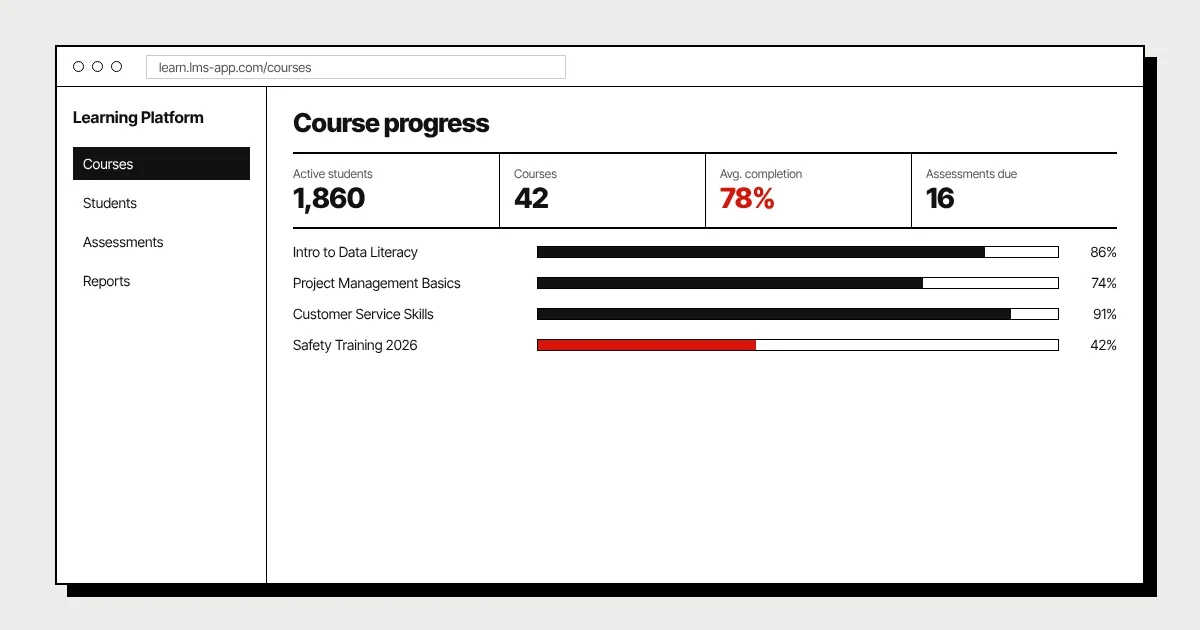
- 01Courses and contentDefine publishing, versioning and access rules around the materials actually delivered. Give educators useful authoring and review workflows rather than requiring code changes for every lesson. Rich media needs captions, transcripts or other appropriate alternatives as part of the content plan.
- 02Student and educator portalsShow relevant courses, tasks and status while protecting information outside each user's role. Student, parent or guardian access must be defined for the audience and institution. Shared accounts or unrestricted record links undermine a useful portal.
- 03Assessments and feedbackAgree submission rules, grading responsibility and what constitutes completion. Handle late work, resubmission and manual review explicitly instead of hiding them behind one score field. Assessment results should preserve enough context for educators to understand and correct normal exceptions.
- 04Progress and administrationUse agreed definitions for completion and engagement so reports do not confuse attendance, content access and learning outcomes. Staff need controlled tools for enrollment and support. Collect only the data needed for the task instead of turning every learner interaction into an unexplained tracking event.
05Student Privacy and Accessibility
Student Privacy and Accessibility
- 01FERPAFERPA protects education records within its scope and affects permitted access and disclosure. Have the educational organization determine roles and applicable requirements before data is shared. Implement approved access and data handling rather than treat a protected login as proof that the entire service meets its obligations. This is general information, not legal advice.
- 02COPPA and under-13 usersCOPPA can apply to certain online services directed to children under 13 or operators with actual knowledge of collecting their personal information. Applicability and appropriate consent arrangements require review for the actual service. Do not assume a school relationship or an age field automatically resolves all obligations. This is general information, not legal advice.
- 03New York Education Law 2-dNew York Education Law 2-d and relevant regulations address protected student and certain educator information. Educational organizations and contractors should confirm applicable agreements, safeguards and permitted uses before processing it. Retention and security conditions belong in the engagement and operating plan, not invented default settings. This is general information, not legal advice.
- 04WCAG accessibilityPlan keyboard access, understandable forms, readable content and accessible assessment interactions. Test actual learning materials and workflows alongside the software, since inaccessible media can block an otherwise usable platform. Agree the technical target and review process rather than promise that one automated check covers every learner's needs.
06Integrations and Mobile Learning
Integrations and Mobile Learning
Zoom or another video service may support scheduled sessions, attendance events or recordings through the available products and permissions. Scope which information moves and how access is controlled. Vendor terms, approvals and data responsibilities must be confirmed before the integration is treated as production-ready.
Student information systems, identity providers and payment tools introduce separate sources of truth. Map enrollment, user identifiers and access changes carefully so delayed updates do not expose a record or remove a learner incorrectly. Staff need visibility into failed synchronization and a safe correction process.
Mobile learning should support the tasks people actually complete on smaller devices. Test reading, media, submissions and navigation rather than shrink every desktop screen. Offline access needs explicit rules for local content, synchronization and sensitive information, and may be a separate scope from a responsive web platform.
07How We Deliver Custom Education Software Development Services
How We Deliver Custom Education Software Development Services
Discovery identifies learners, educators, content and institutional responsibilities, then defines a complete first release. Use representative materials and data that can appropriately be shared for design and testing. The free discovery call is followed by a fixed quote within 48 hours for the agreed scope.
Prototype the learning journey and the administrative work behind it. Two-week sprints with demos let stakeholders test enrollment, assessment and permissions as they develop. Include errors, accessibility and integration failures in acceptance rather than only a successful lesson walkthrough.
Before launch, confirm content readiness, training, production access and the response to learner support requests. You own 100% of the custom code, repositories and credentials. Assign ongoing updates and monitoring while planning future improvements from actual learning and operating feedback.
08Related services
09FAQ
Frequently Asked Questions
Compare the actual learning and administrative workflows with the platform's supported features and configuration. Moodle or Canvas may fit well, while a custom system can suit a distinct journey or integration gap. Include hosting, content operations and future changes in the comparison rather than assume custom development is automatically cheaper or more capable.
10Contact
Let's build your software in New York
Book a free 30-minute call. We'll review your idea and give you an honest plan and estimate.
+1 718-883-7253Service area: Brooklyn, Queens & Manhattan, NYC
Hours: Open 24/7