
01Energy
Custom Energy Software Development in New York
Custom energy software development turns readings and operational records into information a responsible team can act on. SDO serves New York building, facility and energy businesses in Brooklyn, Queens and Manhattan. We plan usage dashboards, monitoring and data workflows around actual meters, vendor interfaces and review responsibilities rather than promise that a chart alone delivers compliance or savings.
02Who This Is For
Who This Is For
A building portfolio may need reliable usage records across locations, while a solar operator may prioritize equipment status and anomalies. A facility team may need to connect alerts with maintenance action. Identify the decision the software should support before collecting every available reading.
Include the people responsible for meters, data review and operational response. They can explain units, gaps and normal behavior that a generic dashboard does not know. A system should distinguish measured information from estimates and show what remains uncertain.
Custom energy management software development can connect useful existing platforms rather than recreate their device control or reporting features. Review supported access and operational needs first. A focused data pipeline or dashboard may resolve the actual gap without turning the project into a broad energy platform.
03Custom Energy Management Software Development & Local Law 97
Custom Energy Management Software Development & Local Law 97
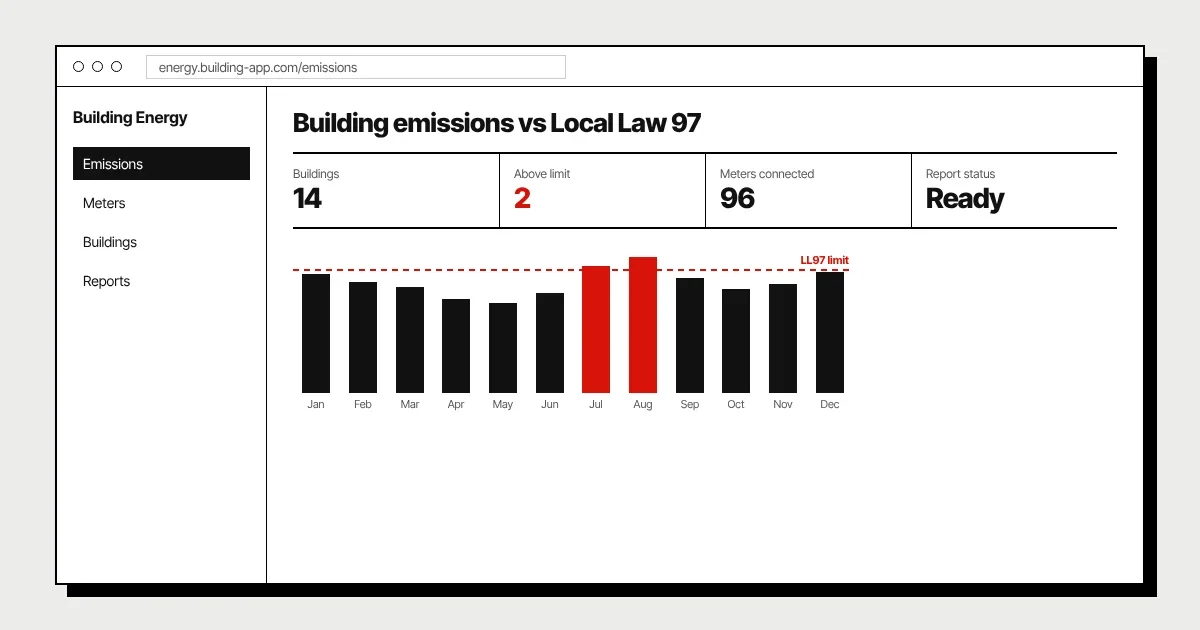
NYC Local Law 97 sets emissions requirements for covered buildings, with applicability and exceptions depending on the property. Confirm the relevant obligations with qualified building advisers before defining calculations and reports. Software can organize information for review but does not certify compliance or replace required professional work. This is general information, not legal advice.
Track the building identifiers, reporting periods and data sources the responsible team needs. Preserve units, timestamps and the status of corrections so an apparent trend can be explained. Missing readings or estimates should not be silently presented as complete measured evidence.
A review workflow can identify data gaps and record who verified information before an export is used elsewhere. Agree the definitions and approved calculation inputs with the responsible professionals. Do not assume an attractive dashboard produces a valid submission without those operational and review steps.
04Custom Software Development for Energy Industry Dashboards
Custom Software Development for Energy Industry Dashboards
- 01Source accessUtility or vendor interfaces may provide interval data, statements or other records with different refresh schedules. Confirm authorization, formats and permitted use before committing to integration. A available export is not proof that live access or every historical record is supported.
- 02NormalizationMap units, time zones and asset identifiers with explicit rules. Preserve the original context where it is useful to investigate changes. A comparison across buildings needs consistent periods and definitions rather than totals that happen to fit on the same chart.
- 03Quality and reconciliationFlag missing, repeated or implausible readings and give authorized reviewers a controlled resolution process. Record adjustments and their reasons instead of silently changing history. The resulting dashboard should make uncertainty visible rather than hide data problems behind a clean line.
- 04Operational reportingShow the measurements and trends relevant to the team's task, with sources and timestamps. Define who may access portfolio or location details. Usage changes need interpretation in context, so software should not attribute savings or equipment performance without supporting evidence.
05Solar and Battery Monitoring
Solar and Battery Monitoring
Solar and battery data depends on the devices and platforms providing it. Review vendor APIs, supported metrics and refresh behavior before designing a monitoring product. Distinguish informational visibility from remote control, since commanding equipment requires a separate assessment of capability, risk and authorization.
Present state, readings and alerts with enough context for operators to interpret them. A delayed signal must not imply that equipment is healthy now, and an anomaly should have an agreed review path. Thresholds and expected performance come from qualified operational owners rather than invented defaults.
Plan vendor outages, changes and credential lifecycle as part of maintenance. Historical trends may need retention and aggregation appropriate to the task and data volume. Monitoring software cannot guarantee energy production, equipment safety or financial returns simply because it displays those metrics.
06IoT Meters, Security and Reliability
IoT Meters, Security and Reliability
Custom software development for the energy industry often begins with actual meter capabilities and network conditions. Supported protocols, gateways or vendor APIs determine how readings can reach the system. Assess device identity and data access before promising that any meter can be connected.
Handle late messages, retries and duplicate readings explicitly. A gap in connectivity may require buffering on a device or gateway, while the service must preserve timestamps and explain missing periods. Define freshness targets that can be tested instead of treating a moving dashboard as proof of real-time delivery.
Restrict administrative and command functions separately from ordinary data ingestion. Use supported authentication and secure communication, validate incoming records and assign device-update responsibilities with the vendor or operator. A protected web interface does not remove physical, firmware or networking risks around connected equipment.
07How We Build Energy Software
How We Build Energy Software
Discovery inventories data sources, assets and the operational decision the first release must support. Establish representative examples, permissions and responsible reviewers before estimating the production service. We send a fixed quote within 48 hours of a free discovery call for the defined scope and dependencies.
Prototype ingestion and the important views with actual supported interfaces or representative data. Two-week sprints with demos make units, timestamps and review behavior visible as the workflow develops. Test outages and corrections alongside normal operation so a clean demonstration does not conceal unreliable records.
Roll out to an agreed asset group or workflow, with monitoring and data-quality owners named. You own 100% of the custom code, repositories and credentials. Budget for storage, vendor usage, updates and further integration separately from the initial build, then prioritize improvements from operating evidence.
08Related services
Related Services
09FAQ
Frequently Asked Questions
Software can organize building and usage records, identify gaps and support review by the responsible professionals. Applicable requirements, calculations and submission duties must be confirmed for the actual property. A dashboard does not certify compliance or replace required professional reporting, even when it uses current measured data. This is general information, not legal advice.
10Contact
Let's build your software in New York
Book a free 30-minute call. We'll review your idea and give you an honest plan and estimate.
+1 718-883-7253Service area: Brooklyn, Queens & Manhattan, NYC
Hours: Open 24/7