
01Enterprise Software Development
Custom Enterprise Software Development in New York
Custom enterprise software development gives New York companies a connected way to manage operations, permissions and reporting. SDO builds internal platforms, portals and workflow integrations around the process your staff actually follow, rather than forcing every department into the same template. Enterprise systems start at $30,000 USD, typically take 5–6+ months and come with 100% code ownership.
02Enterprise Custom Software Development: What We Build
Enterprise Custom Software Development: What We Build
Enterprise software succeeds when staff can complete the work without parallel spreadsheets and undocumented workarounds. We start with the business process, identify the system of record and decide which approvals and exceptions must be supported. The first release should solve a complete operational problem, even if the wider platform is delivered in phases.
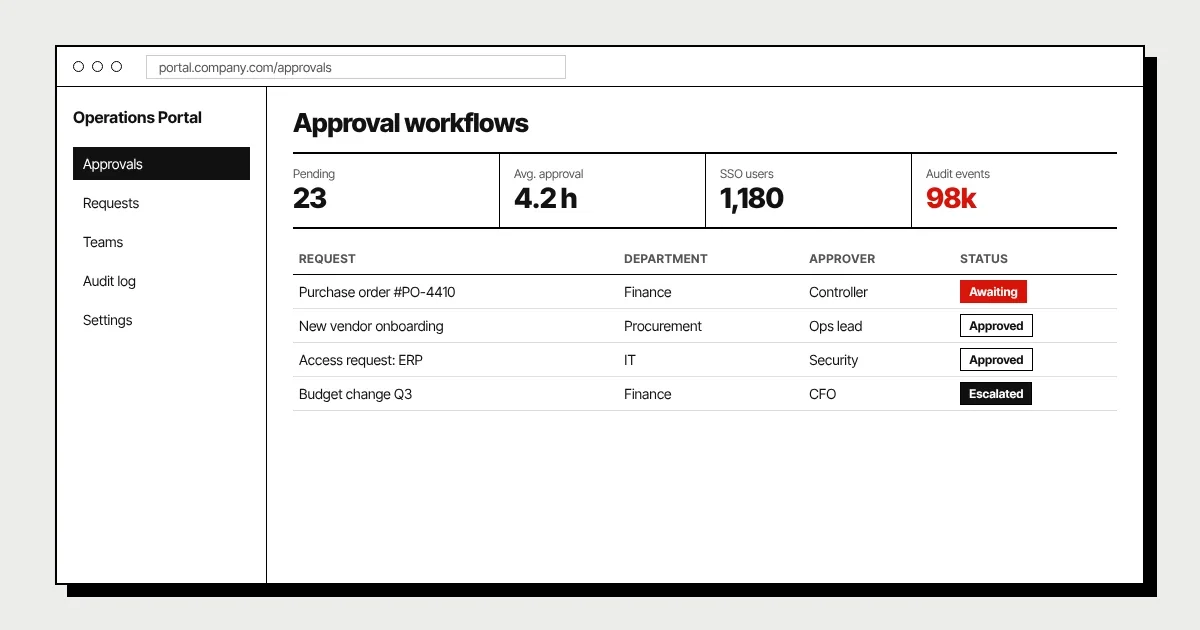
- 01Internal platformsConnect intake, assignment, approvals and reporting in a system shaped to your operations. Make ownership of each task visible and preserve the history needed to understand decisions. Different departments can share data without receiving the same permissions.
- 02Employee and partner portalsGive staff, suppliers or partners controlled access to the actions and records relevant to them. Separate external access from internal administration and agree how accounts are created and removed. Good portal design reduces avoidable email handoffs without exposing information indiscriminately.
- 03Workflow automation and reportingAutomate predictable routing, reminders and calculations while preserving a way to handle exceptions. Reporting should use agreed definitions and traceable source data. A dashboard is only useful when the people reading it understand what its numbers include.
03Who It's For
Who It's For
Enterprise does not simply mean a large company or a large budget. The need appears when multiple teams, locations or systems must coordinate work with clear ownership and controls. A business with a specialist process may need enterprise-style software even when its headcount is modest.
- 01OperationsTeams coordinating jobs, orders or approvals need reliable status and a clear next action. Map exceptions such as missing information, rework and escalation before automating the flow. That prevents the new system from reproducing an inefficient process at higher speed.
- 02FinanceFinance teams need traceable records, reconciliation and controlled changes. Decide which system owns financial data and who can approve, amend or export it. Integrations must preserve business rules rather than move numbers without context.
- 03HRStaff workflows can involve sensitive personal data, document access and approvals across departments. Define who can see which records and how access changes when roles change. Integrate with appropriate existing systems rather than recreating every HR capability.
- 04Multi-location teamsLocation-specific permissions, local workflows and consolidated reporting should be designed together. Standardize the data that must be shared while allowing justified operational differences. Test with people from more than one location before calling the workflow universal.
04Integrations
Integrations
An integration is a business agreement about data as much as an API connection. Define the authoritative system for each record, when changes should synchronize and how conflicts are resolved. Logging, retries and reconciliation keep the connection understandable when a vendor service is unavailable.
- 01ERP and CRMConnect operational and customer records without creating competing versions of the truth. Review vendor APIs, permissions and licensing before estimating SAP, Salesforce or other platform work. Document field mappings and the handling of incomplete or duplicate records.
- 02SSO and Microsoft 365Use the organization's identity arrangements where supported and appropriate. Agree group-to-role mappings, account lifecycle behavior and administrative access. Microsoft 365 integration scope may also depend on tenant permissions, consent and which data the application needs.
- 03Data warehousesMove agreed records into analytics systems with clear definitions and refresh expectations. Plan incremental updates, correction of historical data and access boundaries. The operational app and reporting environment should not quietly disagree about what constitutes a completed transaction.
05Security & Compliance
Security & Compliance
Security requirements belong in discovery because they shape architecture, workflows and acceptance testing. Identify sensitive information, likely threats and the people allowed to perform each action. Agree responsibilities for infrastructure, monitoring and incident handling alongside the application work.
- 01SSO and role-based accessUse an appropriate identity provider and enforce permissions on the server for every protected operation. Separate ordinary users, approvers and administrators, and review how access is revoked. Group membership alone is not a substitute for clearly defined application permissions.
- 02Audit logs and operational controlsRecord meaningful actions with the actor, time and affected record so authorized staff can investigate changes. Protect logs from casual alteration and avoid filling them with unnecessary sensitive data. Define retention, backup and monitoring responsibilities with the operating team.
- 03NYDFS Part 500 where relevantCovered financial-services entities may have specific cybersecurity obligations, with applicable requirements and exemptions depending on the organization. We discuss needed application controls and evidence with your IT and compliance teams; building software does not replace their compliance program or assessments. This is general information, not legal advice.
06Legacy Modernization
Legacy Modernization
A full replacement is not always the safest or least expensive approach. Start by documenting the existing system's important behavior, dependencies and data, including the exceptions staff rely on. Decide which parts can be retained, integrated or replaced without interrupting daily work.
Phased modernization can move one workflow or module at a time, with temporary integration between old and new systems. That requires clear ownership of records during the transition and a plan to avoid duplicate edits. Keep rollback and reconciliation in scope rather than treating migration as a single import button.
Rehearse data migration with representative data and compare record counts, relationships and business totals. Agree how invalid or duplicate records will be handled and who approves the result. A cutover plan should identify the window, checks and response if the new system cannot safely go live.
07How We Deliver Custom Enterprise Software Development Services
How We Deliver Custom Enterprise Software Development Services
Enterprise systems start at $30,000 USD and typically take 5–6+ months; wider transformation programs can run longer. We send a fixed quote within 48 hours of a discovery call for the defined scope. Complex integrations, data quality and external approvals affect both the cost and release plan.
- 01Discovery and designDefine the target workflow, measurable outcomes and dependencies. Prototype the important tasks with actual users and check department-specific permissions. Agree who can approve the scope and resolve conflicting requirements.
- 02Development in two-week sprintsReview working increments with demos instead of waiting for a complete platform. Include integrations and permission checks in the demonstrated journeys. Keep a visible backlog so scope changes can be weighed against budget and release timing.
- 03QA, migration and launchTest the agreed business rules and rehearse migration before production cutover. Coordinate acceptance with IT and operational owners, then release in the agreed stages. Staff training and practical handover reduce reliance on undocumented knowledge.
- 04Support and growthPlan updates, monitoring and future modules after the first release. You own 100% of the code, repositories and credentials and retain control over future delivery. Agree support scope separately so operational coverage and new development have clear expectations.
08FAQ
Frequently Asked Questions
Enterprise systems typically take 5–6+ months, with larger scopes able to run longer. Discovery, design, integrations, migration and stakeholder acceptance all influence the schedule. We agree a first release and phased delivery plan so the business can see working progress through two-week sprint demos rather than waiting for an entire transformation to be finished.
09Related
Related Services
10Contact
Let's build your software in New York
Book a free 30-minute call. We'll review your idea and give you an honest plan and estimate.
+1 718-883-7253Service area: Brooklyn, Queens & Manhattan, NYC
Hours: Open 24/7